
The plateau is a frustrating period. The slowed rate of progress, which is its defining feature, can make you question your methods, your skills – even yourself. Many artists have struggled with plateaus in their artistic journey, and many have called it quits because of it. This is particularly true of visual arts like charcoal drawing and sketching, where visual improvements – or lack thereof – are the measure of one’s abilities.
Plateaus in Art
Plateaus can hit artists at any level. Some arrive at it early, while others don’t experience it until very late in their careers. Others still get stuck into a cycle of growing and plateauing again and again.
Why Most Artists Plateau
Exactly when a particular artist will hit their plateau and how hard it hits them depends on a few things.
Firstly, it depends on the stage you’re at. Given good guidance, most of us have enough innate ability and intelligence to be good at anything in the beginning. This is why the early spurt of progress fills us up with confidence and self-belief. Going forward, however, things get progressively difficult. Learning newer things demands more focus, more time spent learning, and the discipline to keep going. You’ve come a long way, but the way forward is longer still.
Secondly, progress in the arts is a game of managing expectations. When you’re a beginner, there are no expectations, and so everything feels like an improvement. But, as you get better, and gains seem few and far between, time spent learning can seem like one disappointment after another. It is important, then, to be aware that such days are normal, and that you cannot expect visible improvement every time you pick up the brush. The movement upwards is never constant. Often you’ll take one step forward and two steps back. But don’t let that discourage you. In all likelihood, you’re learning to refine what you already know, to trim the excesses, and to optimize how you do things – all things that will make you a better charcoal portrait artist in the long run, even if they’re not visible instantly.
Lastly, and most importantly, when you plateau and how long you stay there depends on how you learn. If you practice little or if you don’t build upon what you learn regularly, you may plateau early and stay stuck there without witnessing growth. That is a recipe for disaster. On the other hand, if you’re disciplined and focused, and trust in the process, you will likely not plateau at all, or only for a short duration. It is not easy, but it is possible.
Also Read: How Charcoal Portrait Workshops Can Enhance Your Creativity
Embracing the Beginner’s Mindset
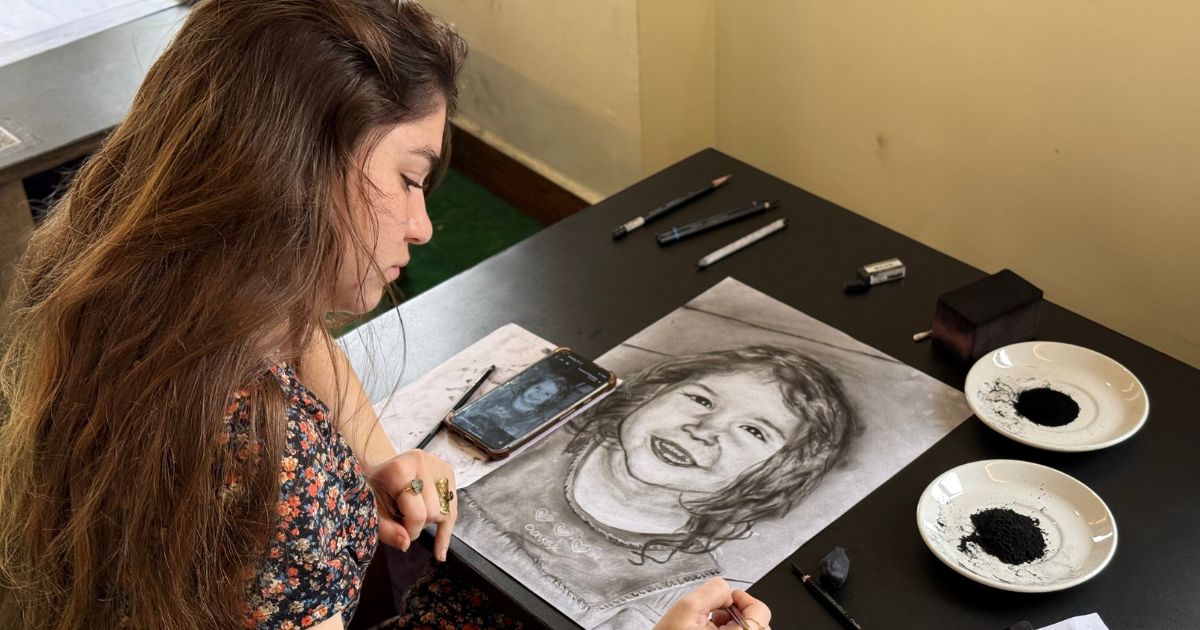
Beginners bring an outlook that is unburdened by their knowledge of the field. Arts favor the beginner’s mindset – that childlike thought process that is not afraid to fail, and always identifies as the humble student, never the master.
But having learned the basics and gained some level of skill, there is always the danger of being complacent. At some stage, we fall prey to comfort and “just making art” rather than learning about art. This is borne out of comfort in one’s abilities as much as fear of facing one’s own ignorance. But all learning is fundamentally uncomfortable. As you learn and expand your knowledge, you also become aware of all that you don’t know, which can breed fear.
Continuing to learn, then, becomes a constant struggle against your ignorance and the fear of the unknown. But the unknown also hides great treasures, if you can only confront it and recover from it the knowledge necessary for growth once again.
Breaking the plateau cycle at Science of Sketching
It is true that learning gets harder the better you become. But there are several strategies to mitigate plateaus. At Science of Sketching, we work in an environment that not only breaks the plateau cycle that artists get stuck into but also promotes continuous learning that allows charcoal artists speed past plateaus should they find themselves approaching it.
To begin with, the courses at Science of Sketching are more than mere lessons; they’re a commitment to a process that can profoundly shift the way you approach and create art. Right from the initial technical classes, students are encouraged to immerse themselves in the charcoal technique – the foundation of our sketching style. Through slow meditative practice, our methods ensure steady continuous learning of the different facets of charcoal sketching, ensuring that they are varied enough to sustain interest and deep enough to reward focus.
Each session is 2.5 hours long – the ideal duration for the brain to get into a focused, meditative state that promotes deep learning without taxing it too much. These sessions are designed to maximize focus and sustain it for long periods.
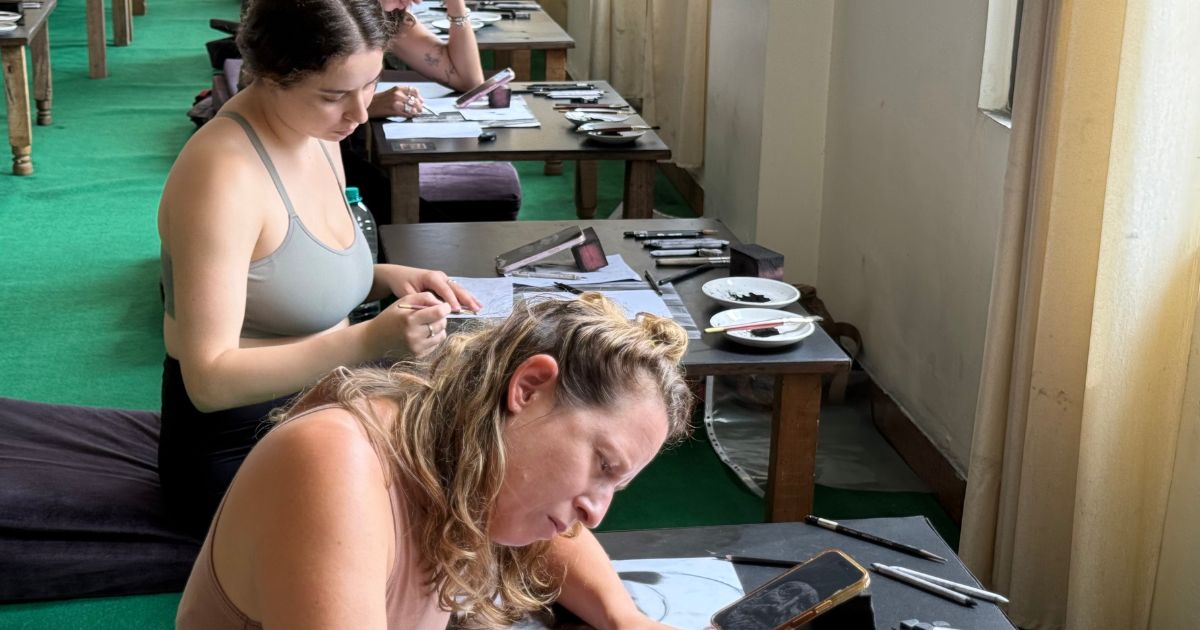
Between each session, we provide equal time for breaks for you to rest and recuperate, allowing the brain to distill the information it has been working on, and the unconscious mind to deliver solutions that the conscious mind encounters.
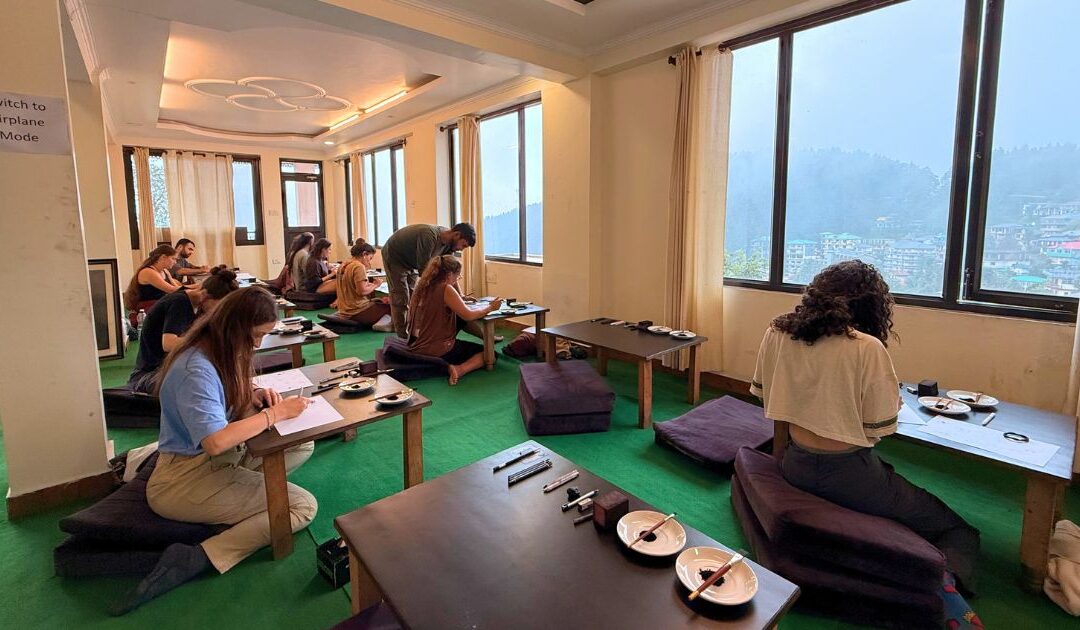
In quiet, sunlit spaces, with awe-inspiring views of the mountain forests outside, and a charcoal sketching master at hand, our methods foster deep learning that will remain with you for the rest of your life. Our Science of Sketching Retreats offer an even more holistic approach to learning, and includes hikes, meditation and yoga, sound healing, art tours, and of course, intensive studio practice.
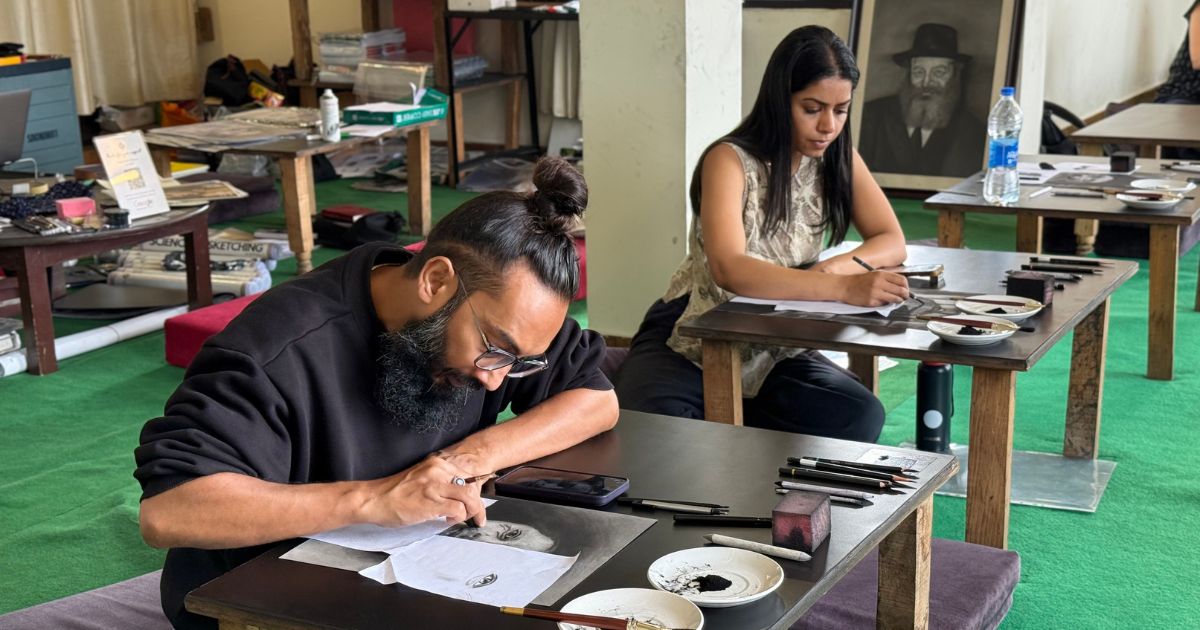
Regardless of their sketching abilities, we encourage students to always have a goal to work towards. For our advanced 6-Day and 9-Day Portrait Courses, we require students to work on a charcoal portrait sketch of their choice that is above and beyond the portraits that they make during the sessions. We believe that optimum learning takes place at the edge of your abilities, the point where you’re not too comfortable with the task, but also not overwhelmed. In short, you must make your goals ambitious, but not unrealistic. At the same time, pick something that interests you and is close to your heart, so regardless of how difficult it is, it will call and tug at you and bring you back to it.
Our methods are embedded in scientific understanding of creativity and learning. We wholly believe that anyone can learn the art of charcoal sketching and drawing. Given enough focused sessions, the will to learn, and a commitment to get better, our methods not only develop your artistic side but ensure you break the plateau cycle that most artists get stuck in.
Also Read: Why 6 and 9 Day Charcoal Portrait Courses Are Ideal for Building a Strong Foundation
Conclusion
Learning is never comfortable, but it is always rewarding. While plateaus can be discouraging, they are a natural part of the learning process. The movement upward may not always be constant but if you don’t stop learning, you’ll never stop growing.
However, if you feel your artistic skills have plateaued, don’t let that pull you down. Plateaus can still have mountains after it. So keep going. Don’t give up, and you’ll scale them eventually.